
If 2025 was about insurers tightening the lens, 2026 looks like the year where the “why” behind your risk matters just as much as the “what”.
This year, insurers continued to place a strong emphasis on risk selection and profitability. For mid-to-large businesses, this often translated to more detailed submissions, greater focus on governance and controls, as well as sharper conversations around claims history, contract terms and the day-to-day management of risk.
Capacity remained available across many areas, but it wasn’t always consistent. For certain classes of business, the difference between a smooth renewal and a difficult one often came down to preparation, presentation and access to the right markets.
What this means going into 2026
Looking ahead to 2026, we expect insurers to keep prioritising quality risks, clear documentation and strong risk narratives. For organisations with complex operations, multi-site footprints or high-value assets, the right strategy is less about chasing the lowest premium and more about structuring cover that will actually respond when needed, while also maintaining continuity of terms and capacity.
This is where the value of a broker becomes particularly clear. A good broker can help negotiate wording, manage insurer appetite, reduce friction at renewal time and support decision-makers in understanding the trade-offs between price, coverage and claims outcomes.
Market-wise, the signal we’re seeing is a little mixed: conditions have generally improved across many insurance lines in Australia through 2025, but insurers are still closely watching claims development, large loss activity, and systemic risks like cyber and weather.
Below is our sector-by-sector outlook for 2026 across Australia, along with practical insurance considerations. Think of it as a risk conversation starter, not a crystal ball.
-
Mining and Resources
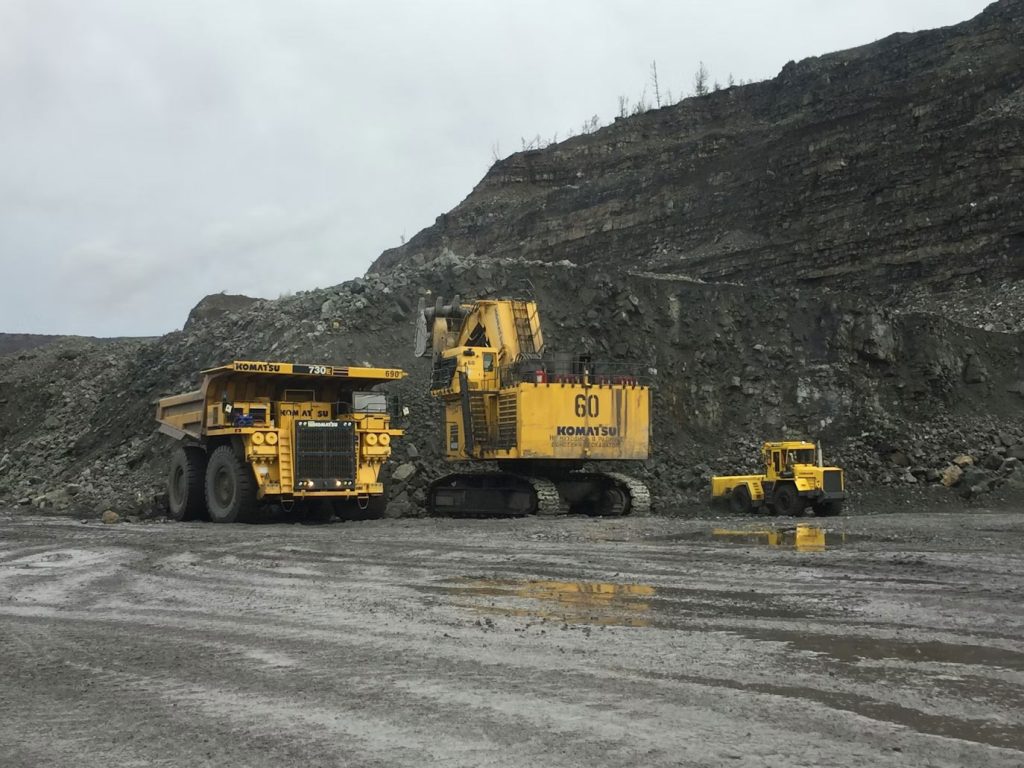
Mining continues to be a pillar of the Australian economy, but the centre of gravity keeps shifting. Iron ore remains the heavyweight, while gold stays supportive in an uncertain world. Meanwhile, “future-facing” commodities like lithium, rare earths and other critical minerals are becoming increasingly strategic, even as individual commodity prices move in cycles.
Government forecasts continue to show export earnings holding at very high levels, edging down only modestly in the near term, with critical minerals forecast to grow over the coming years. That points to a busy operating environment: more projects, more contractors, more supply chain pressure, and more complex risk interdependencies.
The risk profile in 2026 will be defined by three things:
- Operational reliability: unplanned outages, maintenance backlogs, and equipment failure remain expensive.
- Workforce and contractor management: labour constraints and contractor turnover increase the chance of safety incidents and inconsistent controls.
- Project delivery and approvals: the “paperwork” component of mining risk is growing, from ESG scrutiny to community engagement and permitting.
Insurance-based recommendations (Mining)
- Treat your submission like an investment memo. Underwriters respond to clarity: how you run the site, how you manage contractors, what has changed since last year, and what you learned from any incidents.
- Validate your declared values and business interruption assumptions. Too many programs are under-cooked on indemnity periods, contingent business interruption, and the real time it takes to source replacement parts.
- Review contract risk transfer end-to-end. Mining contracts can quietly create uninsured gaps through hold harmless clauses, indemnities “to the extent permitted by law”, and mismatched insurance requirements.
- Stress test catastrophe exposures. Flood, cyclone, bushfire, and access roads are not “property issues only”. They are revenue, logistics, and safety issues too.
See also: Mining Contractors Insurance
2. Renewable Energy and the Energy Transition

Renewables are not just growing, they’re being asked to grow up quickly. Australia’s energy transition is now about delivery capacity: transmission, storage, grid connection, workforce, community consent and long supply chains.
AEMO’s Draft 2026 Integrated System Plan reinforces the scale of investment underway and the dependency on new transmission and firming to keep the system reliable. That means 2026 is likely to bring more construction activity, more interface risk (multiple contractors, multiple scopes) and more operational complexity once projects are energised.
Insurers and underwriters are becoming increasingly focused on:
- Delay in start-up (DSU) exposure on large builds.
- Equipment procurement and warranty alignment, especially for turbines, inverters, batteries and specialised transformers.
- Grid connection and curtailment risk, and how that interacts with revenue forecasts.
Insurance-based recommendations (Renewables)
- Separate “construction risk” from “operating risk” properly. We often see programs where the handover period is blurry, which creates disputes when a loss happens near commissioning.
- Audit your DSU triggers and waiting periods. DSU can be valuable, but only if the insured scenario matches reality, including supply chain lead times and grid connection dependencies.
- Check battery and electrical fire controls. Battery storage is a brilliant asset, but it has a specific loss profile. Make sure detection, separation, and emergency response plans are documented and tested.
- Do not ignore Public Liability and landholder arrangements. Easements, access roads, and neighbour impacts are where disputes tend to start, long before a big property event.
See also: Renewable Energy Insurance
-
Health and Medical Services

Health services are balancing rising costs, workforce shortages, heightened patient expectations and a growing dependence on digital systems. There’s also a clear trend toward more formal collaboration on cyber resilience within the sector.
From an insurance perspective, health remains a high-touch class. Claims can be complex, reputationally sensitive and expensive even when you have done everything right. The biggest 2026 pressure points we’re seeing are:
- Medical malpractice and professional indemnity: claim severity matters more than frequency.
- Cyber and privacy risk: clinical systems, patient data, and supplier ecosystems are all targets.
- Workplace health and safety: fatigue, staffing levels, and contractor use can create volatile risk.
Insurance-based recommendations (Health)
- Keep PI policies aligned with real services delivered. Any change in service lines, locations, or provider mix should trigger a coverage review.
- Treat cyber as patient safety, not just IT. Business interruption from system outages is often the real cost, not just the notification letters.
- Review employment practices and WHS protections. In a tight labour market, disputes, stress claims, and contractor issues tend to rise.
- Use scenario planning before renewal. Walk through your worst day: system outage, major incident, media attention, and regulator involvement. Then confirm your policies actually respond.
See also: Directors and Officers Insurance
-
Aged Care

Aged care is in a period of structural change. The new rights-based Aged Care Act commenced on 1 November 2025, putting the rights of older people at the centre of the system and lifting expectations on governance and provider accountability.
In plain terms, 2026 is likely to reward providers who can show:
- strong governance and incident management,
- good workforce controls and training,
- clear documentation and quality systems.
This is also a sector where reputational risk travels fast. Even a minor incident can escalate if it reveals deeper process gaps.
Insurance-based recommendations (Aged Care)
- Check that your liability program matches your operating model. Residential, in-home support, allied health, transport services, and agency staffing all carry different exposures.
- Strengthen incident reporting and documentation. Underwriters are looking for maturity here, and it directly impacts claims outcomes.
- Review abuse and molestation coverage carefully. This is not a “set and forget” section. Limits, extensions, and retroactive dates matter.
- Do a contract and vendor review. Cleaning, catering, laundry, security and transport arrangements can create hidden liability if insurance responsibilities are vague.
See also: Aged Care Insurance
-
Technology, Professional Services, and Cyber

For tech and tech-enabled businesses, the theme of 2026 is simple: more reliance on systems, more exposure to interruption, more regulatory and contractual expectation.
On cyber specifically, the Australian Cyber Security Centre reports ransomware remains highly disruptive, and it responded to 138 ransomware incidents in FY2024–25.
The important part for business leaders is not the headline number. It’s what sits behind it: extortion tactics, third-party compromise, and the speed at which an incident turns into downtime.
Insurance-based recommendations (Tech and Cyber)
- Do not buy Cyber Insurance in isolation. It must align with your incident response plan, your backups, your vendor contracts and your actual revenue model.
- Confirm business interruption and waiting periods. Many policies respond, but only after a waiting period. If your business cannot tolerate even 12 hours offline, structure matters.
- Review professional indemnity around “scope creep”. Tech contracts often evolve mid-project. Make sure your PI coverage matches what you are actually delivering, not what the original proposal said.
- Get serious about third-party risk. Your weakest link may be a provider you do not control, but your customers will still blame you.
See also: Professional Indemnity Insurance
-
Construction, Infrastructure and Property Development

Construction remains a tough environment: cost escalation, skilled labour shortages, regulatory scrutiny, and complex principal-contractor relationships. Even when projects are well-run, claims can arise from design responsibility, defects, water ingress and interface risk between trades.
Insurers are increasingly forensic about:
- Design and construct obligations
- Remediation exposure
- Cladding, waterproofing, and fire protection measures
- Insolvency risk across the subcontractor chain
Insurance-based recommendations (Construction)
- Clarify who owns design risk. If you are carrying any design responsibility, your professional indemnity needs to be correctly structured and maintained over time.
- Check contract works sums insured against today’s replacement cost. If costs moved 10 to 20% since the project started, your declared values may already be behind.
- Run a subcontractor insurance compliance process. A certificate of currency is not enough. You need to confirm limits, insured activities, and key exclusions.
- Focus on defects prevention, not only insurance. Underwriters reward documented QA processes, independent inspections, and clear handover documentation.
See also: Construction Insurance
A practical note on strategy for 2026

Across every sector, we expect better outcomes for businesses that treat insurance as part of their operating rhythm, not an annual scramble.
The clients who win renewals tend to be the ones who can clearly answer three questions:
- What has changed in the business this year?
- What are you doing to manage the changes?
- If something goes wrong, how will you respond?
At Crucial Insurance and Risk Advisors, we measure “good” customer satisfaction by continually surpassing our clients’ expectations.We’re known for helping clients achieve the “impossible” when it comes to hard-to-find claims, and we back that up with proactive advisory, exceptional service, quick response time and access to an insurer network not often possessed by brokers our size.
If you want 2026 to be the year your program is tighter, clearer, and more resilient, the best time to start is well before renewal. That is where we can reduce friction, protect terms and put you in front of the right decision-makers while there is still room to negotiate.
Contact us to discuss your situation.
References
Australian Energy Market Operator (AEMO)
AEMO — 2026 Integrated System Plan (ISP) hub page (ongoing consultation and updates)
Australian Government (Department of Industry, Science and Resources)
Australian Government (Department of Industry, Science and Resources)
Australian Signals Directorate / Australian Cyber Security Centre (ACSC)
Australian Government (Department of Health and Aged Care)
Australian Digital Health Agency — Corporate Plan 2025–26 (PDF)
 This article was written by Tony Venning,
Managing Director at Crucial Insurance and Risk Advisors.
For further information or comment please email info@crucialinsurance.com.au.
Important Disclaimer – Crucial Insurance and Risk Advisors Pty Ltd ABN 93 166 630 511 AFSL 45150. This document provides information rather than financial product or other advice. The content of this document, including any information contained on it, has been prepared without taking into account your objectives, financial situation or needs. You should consider the appropriateness of the information, taking these matters into account, before you act on any information. In particular, you should review the product disclosure statement for any product that the information relates to it before acquiring the product.
Information is current as at the date documents are written as specified within them but is subject to change. Crucial Insurance, its subsidiaries and its associates make no representation as to the accuracy or completeness of the information. All information is subject to copyright and may not be reproduced without the prior written consent of Crucial Insurance.